

Christmas products market analysis
The Christmas products market is an important part of retail, covering the production and sale of holiday-related products such as Christmas trees, fairy lights and decorations. Read our analysis to find out more!

The Christmas products market is a significant sector of trade, covering the production and sale of holiday-related products. Poland plays an important role in the global market, holding leading positions in sales of chocolate, classic toys and baubles. Europe, especially Germany and the United Kingdom, leads in the production of Christmas goods. Globally, however, most holiday products are made in China, which makes China a huge supplier to buyers all over the world.
Where does the EU import Christmas decorations from?
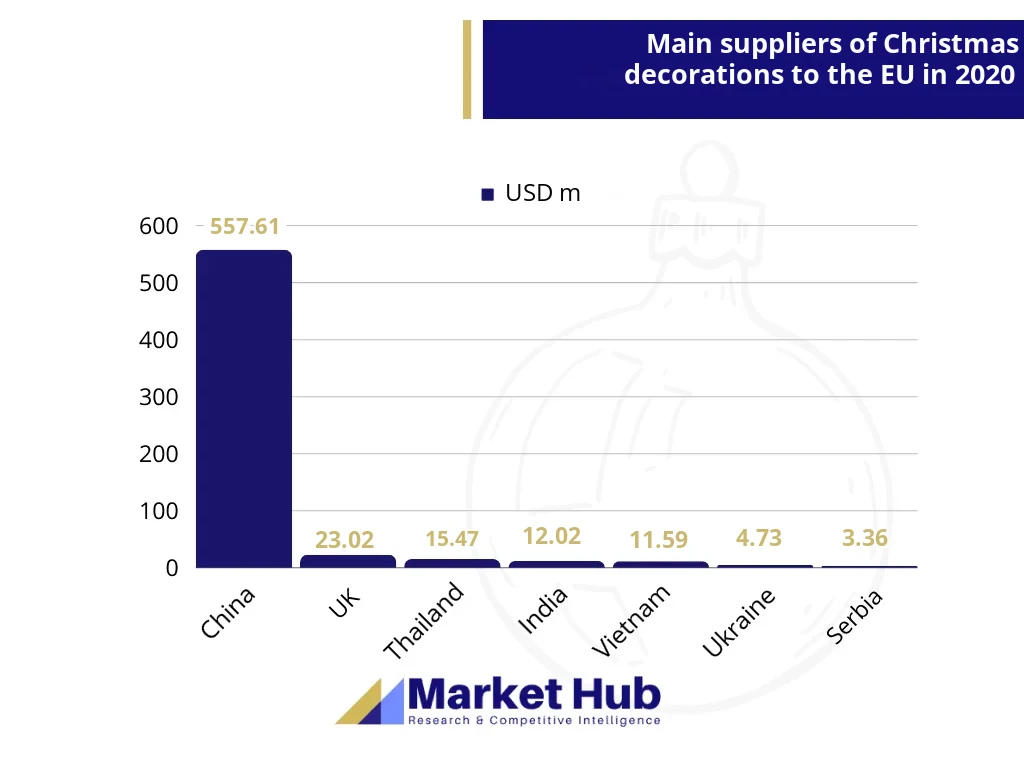
In 2020, China was the main supplier of Christmas decorations to the European Union by import value, at USD 557.6 m. It was followed by the United Kingdom (USD 23.02 m), Thailand (USD 15.47 m) and India (USD 12.02 m).
What are the trends in the Christmas products market?
Key trends include the combination of social media and e-commerce, environmental awareness, vintage products, personalisation and minimalism, and saving money and shopping online.
Which Christmas markets in Europe rank highest?
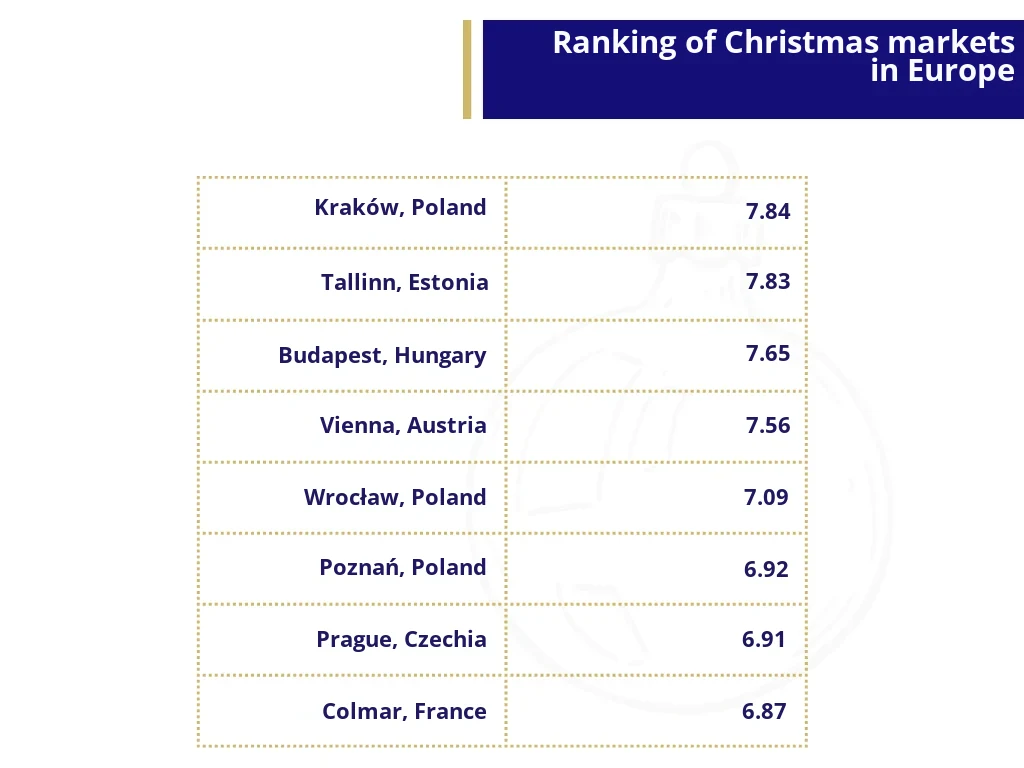
The podium of the European Christmas markets ranking is made up of Kraków (7.84 points out of 10), Tallinn (7.83 points) and Budapest.
Christmas markets attract crowds of tourists. According to a ranking based on duration, popularity on social media and the number of Google searches, Kraków is on the podium with 7.84 points out of 10. Tallinn (Estonia), with 7.83 points, and Budapest (Hungary) are also on the podium. The top 10 also included two other Polish Christmas markets: Wrocław (5th place, 7.09 points) and Poznań (6th place, 6.92 points).
Who are the leaders of the Christmas products market?
The leaders of the Christmas products market include Amscan, Balsam Hill and Barcana (The Decor Group), while the Chinese city of Yiwu is a major production centre for Christmas decorations.
What threatens the Christmas products market?
One of the main threats to the Christmas products market is the current inflationary trend and the related rise in the cost of basic products. Rising prices of raw materials, production and transport may hurt manufacturers' margins and force them to raise retail prices. This in turn may reduce consumer demand, especially as shoppers are particularly price-sensitive during the holiday season.
In addition, as e-commerce grows rapidly, relying on bricks-and-mortar retail is becoming another threat to the Christmas products industry. Companies that do not adapt to online shopping may lose customers to competitors that offer fast, convenient online sales. Where physical shops fail to keep up with consumer expectations, the risk of losing customers and market reach grows.
What is the forecast for the Christmas products market?
The industry is expected to focus on innovation, cooperation and geographical expansion, with the USA holding a 30% market share and China reaching around 20%.
Authors: Aleksandra Sirant, Katarzyna Kucia
Ready-made market reports in PDF
Market Scan by MarketHub has ready-made PDF reports on selected markets: market size, key players, trends and data sources. If your market is not covered, we will prepare an in-depth market analysis.