

Modular homes market analysis
Although modular construction is still uncommon and rather underrated in Poland, experts believe it is the future. One reason is that it offers better quality, faster delivery and a smaller environmental impact. Our analysis of the modular homes market showed that this type of construction is not yet widespread in Poland, but it has been steadily gaining importance for several years.
Modular construction has several advantages. The main one is the short time needed to complete a project. Buildings can also be easily dismantled and demolished, and construction produces less waste, which makes it easy to apply circular economy principles. Modular buildings meet national energy efficiency requirements, which makes them an attractive option. Quality is very high because of factory standards and strict quality control at production plants. This is why many see modular construction as the future of the industry: fast, environmentally friendly and well built.
How big is the global modular construction market?
The global modular construction market was worth USD 84.48 bn in 2023 and is forecast to reach USD 131.58 bn by 2030, a CAGR of 6.5%.
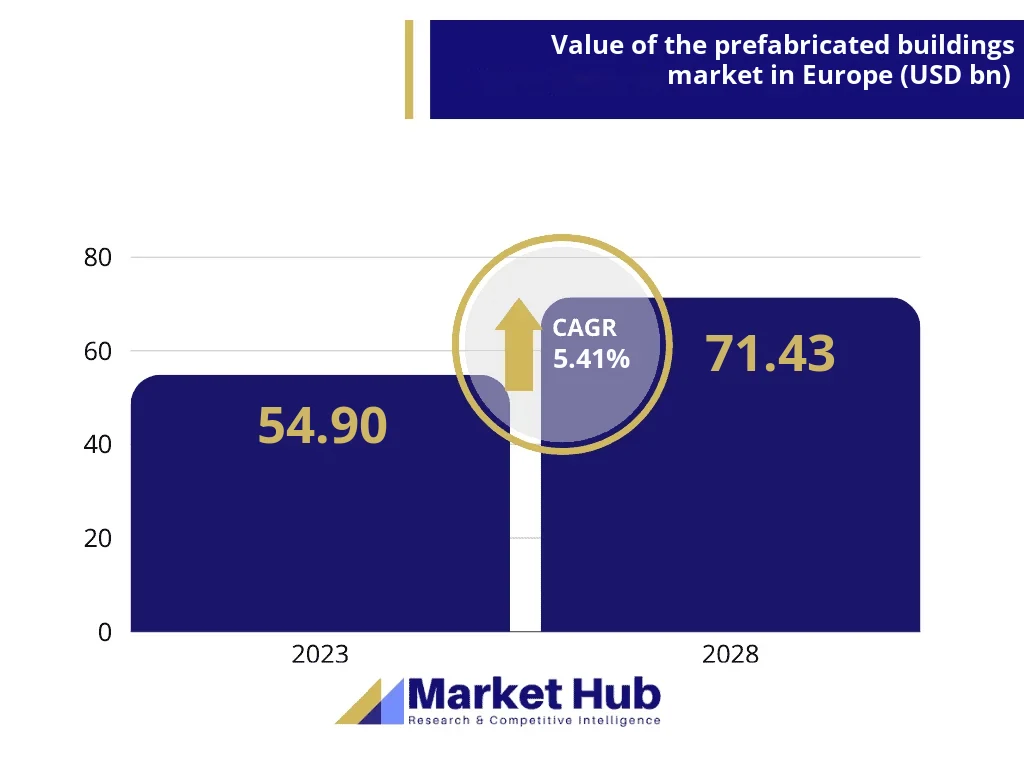
Interest in modular homes worldwide has remained at roughly the same level for years, except in some countries where this form of construction is becoming increasingly popular. In Poland, interest is growing slowly. Interest is highest in countries such as Ireland, New Zealand, the United Kingdom, Australia, the Philippines, Canada, the United States and India. These countries are actively developing their modular homes markets. The global modular construction market was worth USD 84.48 bn in 2023 and is forecast to reach USD 131.58 bn by 2030, which means a compound annual growth rate (CAGR) of 6.5%. In 2022 the global modular construction market was worth USD 79.92 bn. In Europe, the prefabricated buildings market is estimated at USD 54.90 bn in 2023 and is expected to reach USD 71.43 bn by 2028, which means a compound annual growth rate (CAGR) of 5.41%.
How will the modular homes market in Poland develop?
The modular homes market is attracting growing interest in Poland, and prefabricated construction could help fill the housing gap, estimated at 1–1.5 million dwellings in 2022.
The modular homes market is attracting growing interest in Poland, and somewhat less abroad. Modular construction is becoming an attractive option especially in cities, where shorter project lead times are crucial. The market outlook seems promising, but it requires constant adaptation to changing customer expectations and industry regulations. Technological progress and competition in the modular construction sector point to rapid growth of the industry. In addition, prefabricated construction could help fill the housing gap, estimated at 1–1.5 million dwellings in 2022. As Kamil Kowalczyk, member of the management board and sales director of Unihouse, a manufacturer of modular buildings, puts it: The popularity of modular construction in Poland is constantly growing. It is now present in practically every area, from housing to public buildings such as healthcare and education facilities. Looking at the last dozen or so years, people's awareness has grown tremendously. That is why I think further development will happen in leaps and bounds rather than at a snail's pace.
What does the cost of a modular home depend on?
The cost of modular construction depends on the standard and type of building, and the technology itself shortens lead times and reduces infrastructure costs.
Price is not the main factor, but modular construction can be cost-effective, depending on the standard and type of building. Especially in urban projects with difficult site access, modular technology shortens lead times and reduces infrastructure costs. It also makes it easy to add green solutions, such as solar panels, at the prefabrication stage, which brings financial savings and high build quality.
What does it take to build a modular home successfully?
A modular home build must be overseen by an experienced designer who understands the technology, and choosing a reputable contractor is essential.
The construction of a modular home must be overseen by an experienced designer who understands how this technology differs from traditional construction. Choosing a reputable contractor is essential, because modular homes are made to order, and the technology needs specialist know-how and time to master. Learning to use this technology well takes time and effort, because it differs significantly from traditional construction methods.
Who are the leaders of the modular homes market in Europe?
The main players in the highly fragmented European modular construction market include Skanska, Modulaire Group, DFH Group, Laing O'Rourke, Bouygues Construction and Elements Europe.
The European modular construction market is highly fragmented. The main market players include Skanska (Sweden), Modulaire Group (United Kingdom), DFH Group (Germany), Laing O'Rourke (United Kingdom), Bouygues Construction (France) and Elements Europe (United Kingdom).
What are the prospects for the modular homes market?
The outlook for the modular homes market is promising, although Poland is developing more slowly in this area than some countries.
Although trends show growing interest worldwide, Poland is developing more slowly in this area than some countries. Nevertheless, the market outlook is promising, and forecasts point to steady annual growth of the global modular construction market. Modular homes are a promising development model for the construction industry, given their compatibility with the idea of sustainable development and their ability to deliver housing quickly.
Authors: Cyprian Laskowski, Katarzyna Kucia
This text is not a full market analysis of the kind we carry out for our clients. This publication contains only selected information about the market, which we can explore in more depth and expand on as a custom project.
Modular homes market in Poland
A ready-made PDF report from Market Scan by MarketHub: market size, key players, trends and data sources. We email it to you within 3 business days after payment.