

Clothing market analysis
The clothing market analysis showed that European clothing exports are growing, with Poland standing out for its rapid growth. The Polish market is one of the largest in Central and Eastern Europe. Find out more about the Polish and European markets from our market brief!
The full report on this market in PDF, delivered in 3 business days.
Order the scanThe value of the clothing market in Europe is estimated to reach USD 486.9 bn in 2024, with an annual growth rate of 2.06% (CAGR, 2024–2028). As elsewhere in the world, the largest segment by customer is women's clothing. The women's clothing segment is expected to reach USD 264.3 bn this year. Forecasts also indicate that in 2024 per capita spending on clothing in Europe will amount to USD 576.9. Each European resident is expected to buy an average of 41.8 garments this year.
According to the Kantar BrandZ report, the most popular clothing brands are: Nike (US), Zara (Spain), Lululemon (Canada), Adidas (Germany), Shein (China), Uniqlo (Japan), H&M (Sweden), Puma (Germany), Anta (China), Pull&Bear (Spain).
01
How big is the clothing market in Poland?
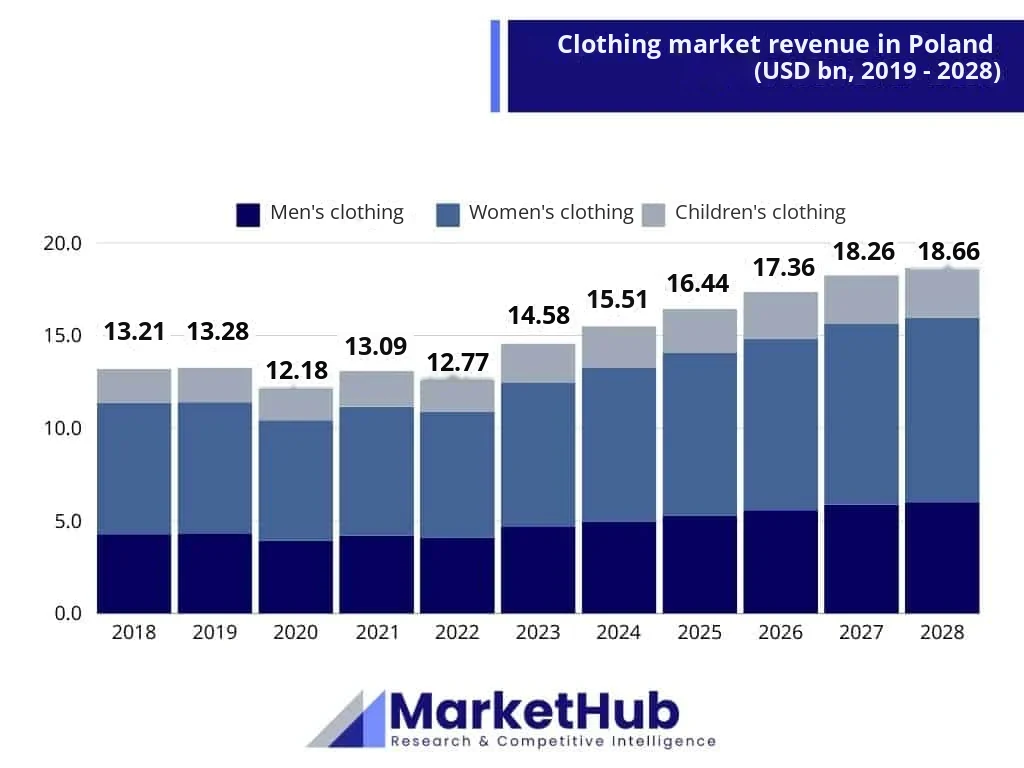
Revenue in the clothing market in Poland is estimated at USD 15.51 bn in 2024, with an annual growth rate of 4.73% (CAGR 2024–2028).
The Polish clothing market is one of the largest in Central and Eastern Europe. Revenue in the clothing market in Poland is estimated at USD 15.51 bn in 2024, with an annual growth rate of 4.73% (CAGR 2024–2028). The market has grown rapidly, and the coronavirus pandemic slowed it only slightly. Of all customer segments, women's clothing is the largest and is expected to reach USD 8.28 bn in 2024. Forecasts indicate that in 2024 per capita spending on clothing in Poland will amount to USD 385.7. Each resident is expected to buy an average of 32.7 garments this year. Most Poles still prefer to buy clothing in brick-and-mortar shops (87.2% of the market). In 2023, 12.8% of Poles chose to shop online.
02
Who buys second-hand clothing and how fast is the market growing?
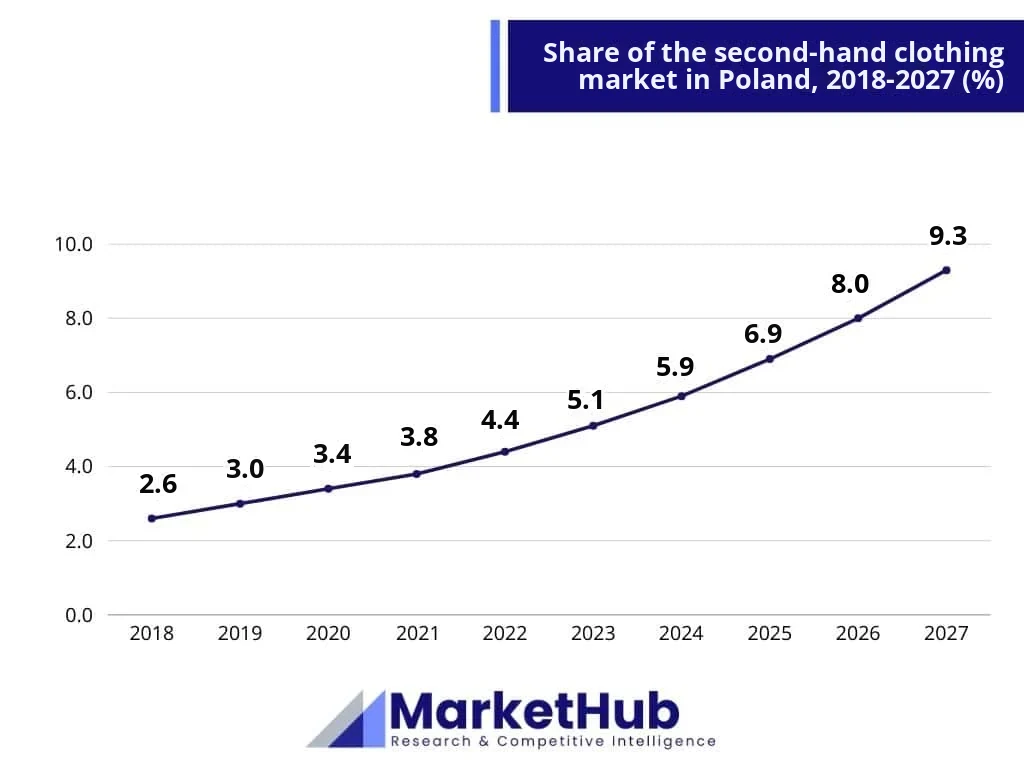
Second-hand clothing is bought most often by people with high incomes (38%), women account for 70.3% of consumers, and by 2027 used clothing is expected to reach 9.3% of the clothing market.
In an era of growing environmental awareness and sustainable fashion trends, the second-hand clothing market is also booming. Interestingly, it is people with high incomes who most often buy used clothing: as many as 38% of them choose this way of shopping. At the other end of the spectrum are people with low incomes, of whom only 26.9% decide to buy second-hand clothing. It is no surprise that women dominate the second-hand clothing segment. They account for as much as 70.3% of all consumers. Their choices drive this rapidly growing market. Most followers of this trend are in the 25–34 (31.4%) and 35–44 (29%) age groups. They are the ones who most often appreciate the uniqueness and environmental value of used clothing. Growing consumer awareness is also increasing the market share of second-hand clothing. By 2027, used clothing is expected to reach 9.3% of the clothing market.
03
How much clothing does the EU export and what is Poland's role?
According to Eurostat, EU countries exported clothing worth EUR 140.2 bn in 2022, and Poland was among the largest exporters with EUR 10.4 bn.
Eurostat statistics show that in 2022 EU countries exported clothing worth EUR 140.2 bn. This is a significant increase compared with EUR 102.6 bn in 2017. Of this total, 72% went to other EU countries and 28% to the rest of the world. The largest exporters in 2022 were Italy (EUR 24.9 bn), Germany (EUR 24.4 bn), Spain (EUR 15.6 bn), the Netherlands (EUR 15.2 bn), France (EUR 13.3 bn) and Poland (EUR 10.4 bn). These six countries accounted for 74% of all EU clothing exports. Poland and the Netherlands stood out for particularly fast growth, with average annual growth in export value of more than 10%, and Poland's exports grew by as much as 16.2% a year.
EU clothing imports are split almost evenly between imports from other EU countries (48.4%) and from outside the EU (51.6%). Five of the six largest intra-EU exporters are also the largest importers of clothing. This suggests that some EU countries are becoming important regional distribution hubs. The Netherlands, the largest exporter without a significant local clothing manufacturing industry, acts as an export hub thanks to its large port. Poland, whose exports to other EU countries grew by an average of 21% a year in 2017–2022, is becoming a key distribution hub for Eastern European countries.
How big is the clothing market in Poland?
A ready-made PDF report from Market Scan by MarketHub: market size, key players, trends and data sources. We email it to you within 3 business days after payment.
Want to use this brief?
You can quote the data if you name the source and, where possible, link to our website. Use this credit line:
Source: MarketHub, "Clothing market analysis", markethub.pl, 07.2024