

FMCG market analysis
The FMCG market (fast-moving consumer goods) covers products that are bought regularly to meet basic needs. These products mainly include food, beverages, cosmetics, cleaning products, alcohol and tobacco products.
Poland is one of Europe's leading producers of meat (especially poultry), milk, and vegetables and fruit. Total retail sales rose by a significant 6.1% year on year. For the products with the largest market share, i.e. food, beverages and tobacco products, retailers reported a 1.3% increase in sales. The FMCG market analysis revealed major, long-term changes ahead: the continued development of the e-grocery sector and the growing importance of healthy food and organic products.
A new sector known as food nutraceuticals is growing. Customers who look after their health and do sport are looking for products containing beneficial nutrients, dietary additives, herbs and supplements.
A closely related trend is EcoFood, which is slowly gaining ground in the Polish market. While other Europeans spend EUR 90–195 a year on such food, Poles spend just EUR 4 per person. However, in the long term, producers can expect demand for such food to grow by 20% a year.
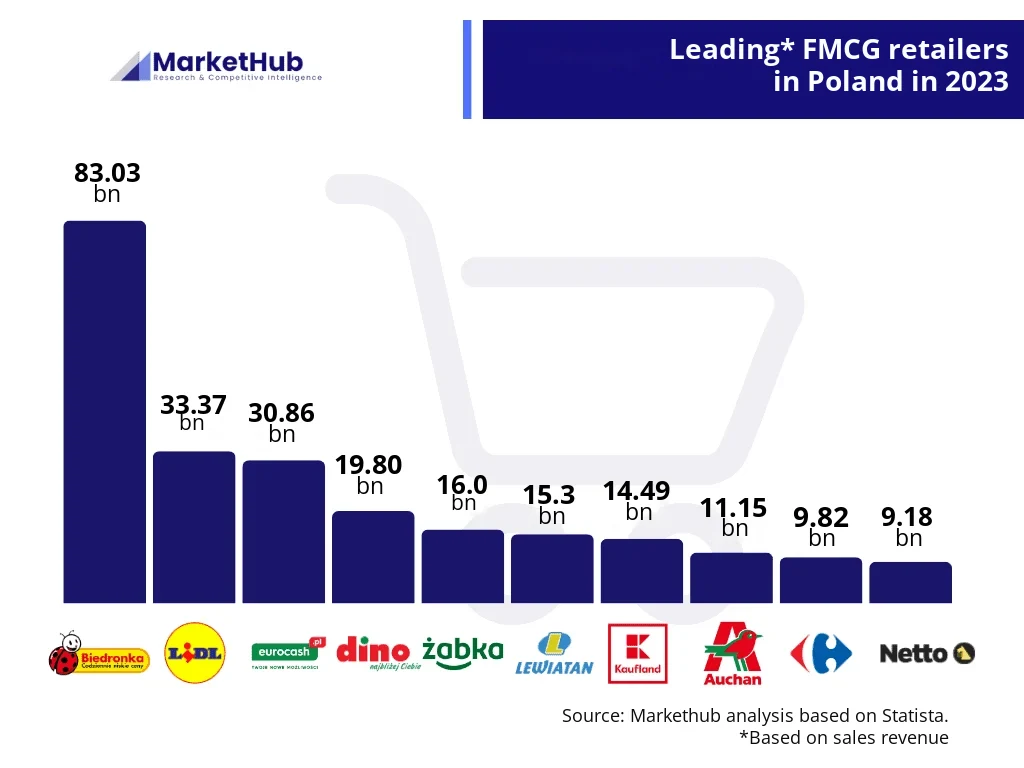
Which FMCG retailers in Poland have the highest revenues?
The FMCG retailers with the highest sales revenues in Poland were the retail chains Jeronimo Martins (Biedronka), Lidl and Eurocash.
What are the main trends in the FMCG market?
The three main trends in the FMCG market are sustainability, the growing importance of e-commerce, and big data and analytics on customer behaviour.
The FMCG market is undergoing a significant transformation in response to changing consumer demand and post-pandemic changes in customer behaviour. The three main trends in the FMCG market are:
1. Sustainability
Recyclable or reusable packaging is becoming standard among FMCG companies. Vegan ingredients and energy-efficient solutions are also being used more and more often to reduce the carbon footprint.
2. The growing importance of e-commerce
Online sales in the FMCG sector are growing. This is mainly linked to changes in consumer habits after the COVID-19 pandemic. When it comes to buying food online, most Poles use marketplace platforms to purchase dry and relatively long-life products. The clear leader is Allegro. However, for everyday grocery shopping, more people choose delivery apps such as Glovo, Wolt or Lisek.
3. Big data and analytics
Big data is changing the FMCG industry by providing information on customer behaviour. As online shopping grows, brands use this data to improve customer relationships. Analytics in the FMCG sector provides a deeper understanding of consumers' shopping habits, which drives product development.
Ready-made market reports in PDF
Market Scan by MarketHub has ready-made PDF reports on selected markets: market size, key players, trends and data sources. If your market is not covered, we will prepare an in-depth market analysis.